“Freedom on two wheels” is painted on the window of The Bike Station’s Tollcross hub in Edinburgh. The phrase captures a promise the city is counting on. Edinburgh has set a goal of reaching net zero by 2030, and transport, especially private cars, is one of the largest sources of carbon emissions. Cycling offers residents a cheaper, lower-carbon way to move through the city on their own terms. But real barriers remain. Cycling culture can feel exclusive, favoring able-bodied, white riders while overlooking the growing number of disabled people and refugees who want to ride. Edinburgh’s wet, windy weather speeds up wear and tear on bikes, making maintenance expensive and even intimidating for many riders. And although the city has begun to prioritize cycling infrastructure, many roads are still difficult to navigate, often forcing cyclists to share lanes with cars.
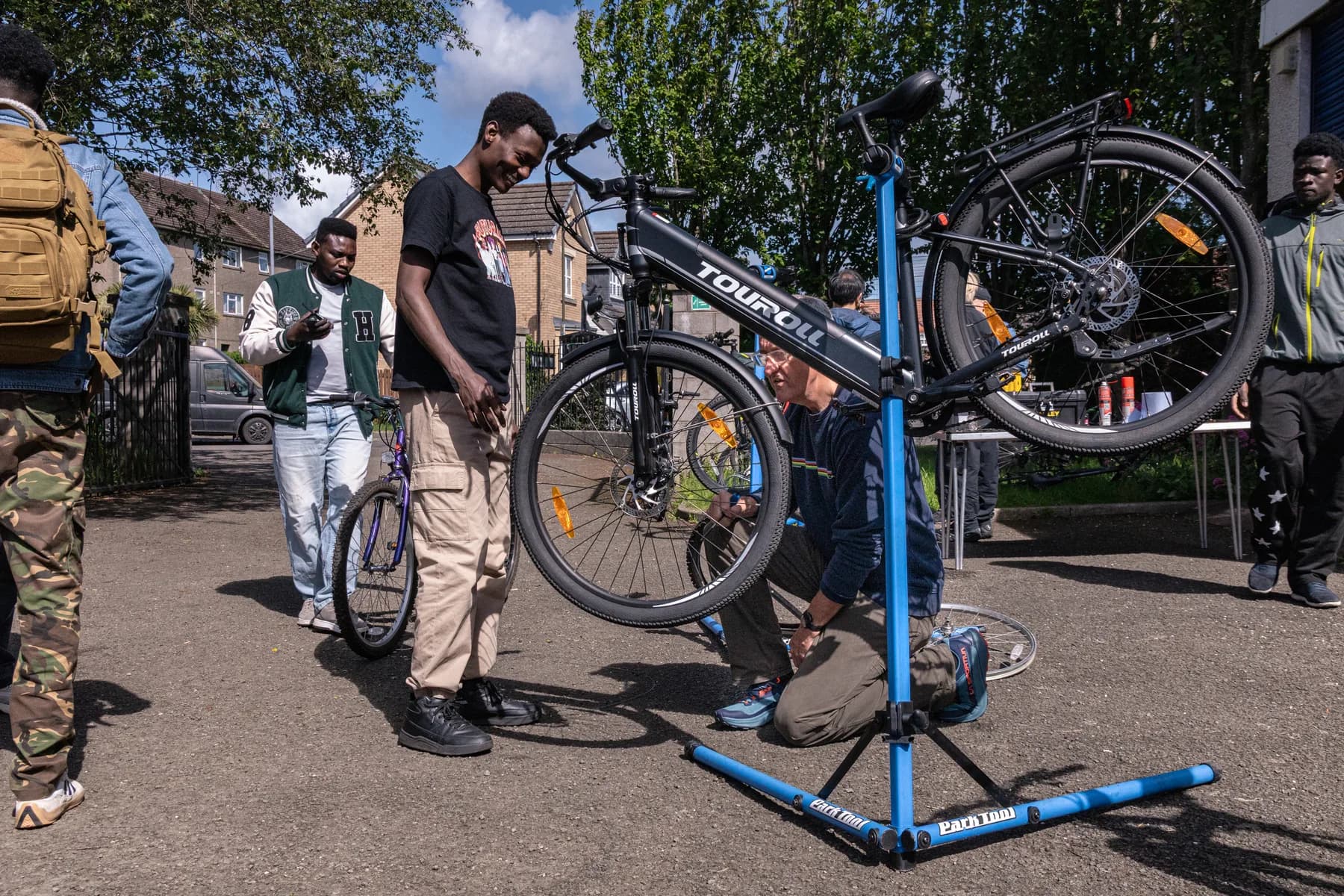
Organizations such as The Bike Station, the Edinburgh and Lothians Regional Equality Council (ELREC), and Thistle Foundation are working to break down these barriers. The Bike Station, a bike-recycling charity, runs Fix Your Own Bike sessions for the public and trains volunteers like Paul Kirkacey of ELREC, who teach bike repair for free in the community. ELREC’s cycling club offers free cycling classes, led rides, and drop-in repair sessions outside its local neighborhood center, and many of its participants are Sudanese refugees. Thistle Foundation, a Craigmillar-based health and wellbeing charity for people with disabilities and long-term health conditions, runs inclusive cycling sessions using a fleet of adaptive bikes on loan from Cycling UK, including tricycles, hand cycles, and side-by-side tandems that would be too expensive for most riders to buy. Each of these organizations is helping to make getting around Edinburgh more sustainable and more accessible, especially for people who would otherwise be priced out of cycling.